FITO Museum of Vietnamese Traditional Medicine [July 23, 2025]
Updated: Aug 31, 2025
Today I visited the FITO Museum of Vietnamese Traditional Medicine. FITO is a pharmaceutical company based in Vietnam that specializes in drugs rooted in the philosophy of traditional medicine. The museum showcases the foundation of their pharmaceuticals—Vietnamese Traditional Medicine.

Upon entering the museum, I was first seated in a room to view a short film on the history of traditional medicine. The film gave a brief introduction to the history of Vietnamese traditional medicine, from the imperial period of Vietnam to the present. After the film, I took an elevator up to the artifacts section of the museum. Two of the recurring figures I noticed were Tuệ Tĩnh (14th century) and Hải Thượng Lãn Ông (18th century), the first credited as pioneers of Vietnamese Traditional Medicine.

Tuệ Tĩnh (14th century) was a Buddhist monk with the philosophy “Nam dược trị Nam nhân,” or Vietnamese medicine should treat Vietnamese people. As a dedicated physician and monk, Tuệ Tĩnh strove to make medical care accessible to all, initiating a system of free clinics serving patients in need via Vietnamese Traditional Medicine herbology. Furthermore, despite his forceful departure from Vietnam to serve as a physician to the Ming Dynasty, Tuệ Tĩnh compiled his works, Nam dược thần hiệu and Phú thuốc Nam, both detailed manuscripts compiling over 600 medicinal herbs native to Vietnam and their properties (“Cuộc đời”).

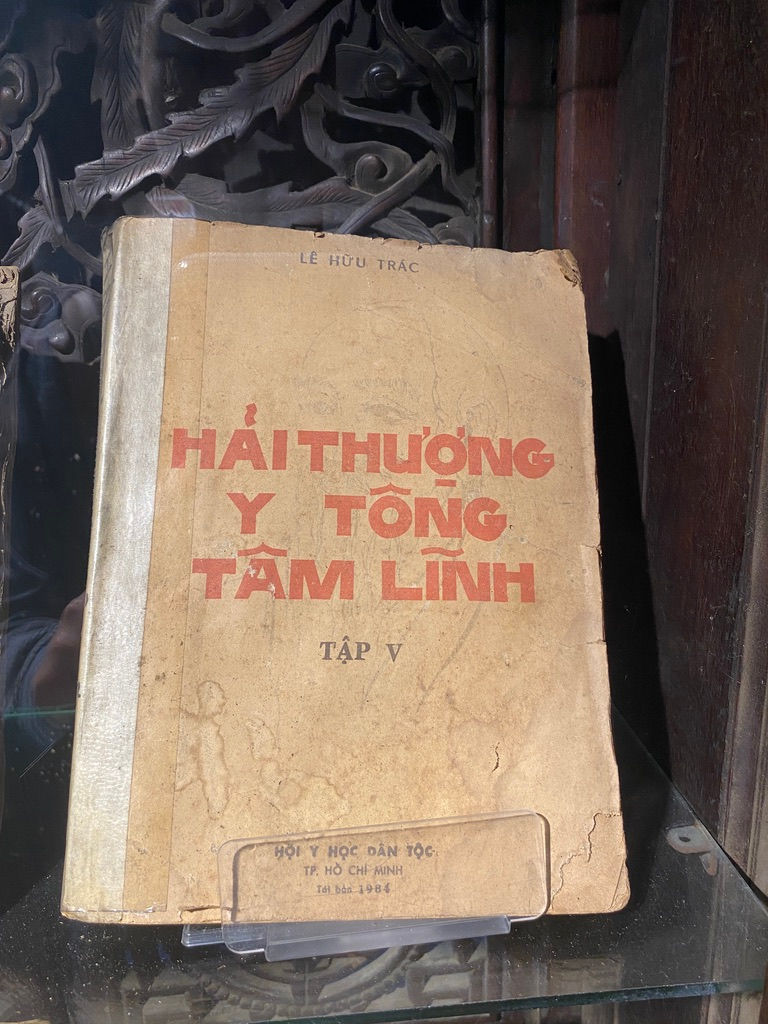
Hải Thượng Lãn Ông (18th century) continued the legacy of Tuệ Tĩnh by further creating manuscripts to document Vietnamese Traditional Medicine—his most prominent work being Y Tông Tâm Lĩnh, a herbal medicine encyclopedia composed of 28 volumes and 66 books detailing Vietnamese Traditional Medicine methodology. This encyclopedia established the standardization of Vietnamese Traditional Medicine, serving the next generations of pupils to learn and preserve.
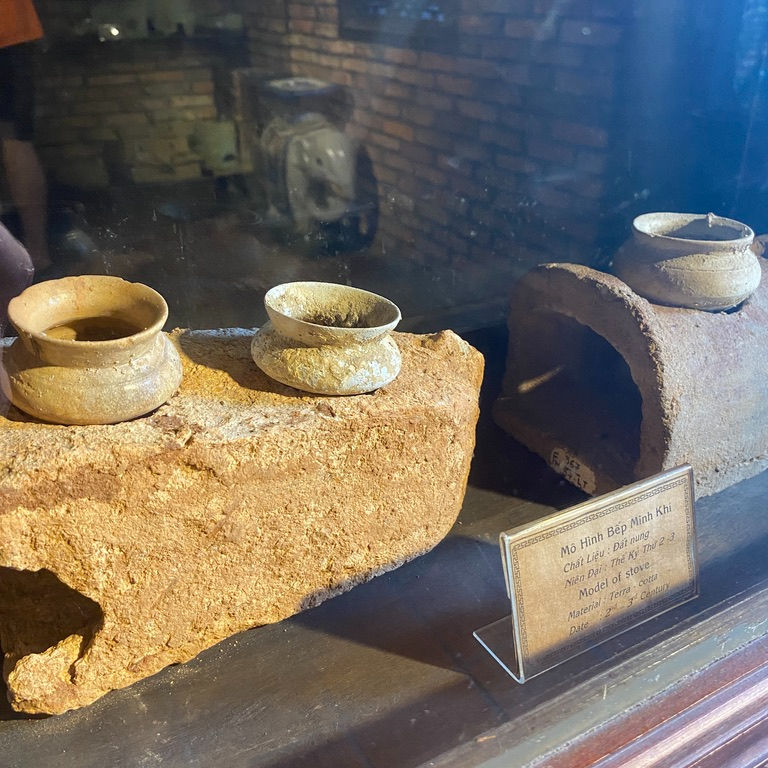
Further exploring the museum, I came across a diverse range of tools utilized in the preparation of herbal medicines. To begin listing, medicinal ingredients were cut with a dao cầu, or slicer, to dissect them and obtain the necessary sections. To grind these cut sections, bàn nghiền, or a stone grinding table, was used. Its counterpart, the apothecary's mortar, or thuyền tán, was also used to grind various ingredients of varying densities. For consumption, medicinal ingredients were then prepared in water boiled with a bếp minh khì, terra-cotta stove, or nồi 3 chân, three-legged pot.



Medicated liquor was another vector for delivering Vietnamese Traditional Medicine treatments, most popularly used by the imperial dynasties. Liquor infused with prepared herbs was stored in liquor jars, or bình rượu, often made of ceramic.

Now, onto my favorite part of the museum: the herbal medicine floor, which was entirely dedicated to the native medicinal plants of Vietnam. A wall was lined with jars displaying these species with their ethnic name, scientific name, tastes, and medicinal purposes. From rễ mướp (Hibiscus esculentus L.) to dạ giao đằng (Polygonum multiflorum Thunb.), these herbs are utilized to treat a diverse range of conditions, depending on their preparation, such as cough to insomnia.

Lastly, the museum culminated in a floor dedicated to where Vietnamese Traditional Medicine stands today. With rapid advancements in medicine and pharmaceuticals, Vietnamese Traditional Medicine has diversified treatment methods. Tradition has become integrated with modernity. For example, instead of boiling herbs for consumption, modern drugs have simplified the preparation process, encapsulating herb concentrates in a small pill or ointment as pictured below.

Exploring six floors of history, the FITO museum of Traditional Vietnamese Medicine demonstrated how the cultural prominence of traditional medicine practice continues to flourish in 21st-century Vietnam. United by purpose to heal, the integration of modern medical approaches with traditional medicine has demonstrated an area of promise as Vietnamese healthcare continues to evolve.
All photos taken are credited to the artifacts at the Museum of Traditional Vietnamese Medicine (41 Hoàng Dư Khương, Phường 12, Quận 10, Hồ Chí Minh).
Works Cited
“Cuộc Đời – Thân Thế – Sự Nghiệp Của Đại Danh Y Thiền Sư Tuệ Tĩnh.” Trường CĐ Y Dược Tuệ Tĩnh Hà Nội, Feb. 2020.


Comments